
1Built from the simulated design
135robots built by hand
~13kpieces
~240 hestimated building and testing
461real videos, each paired with its simulation
2How the rest fail
NeurIPS 2025
ICML 2026
ICML 2026
NeurIPS 2026
ghadinehme.com/publications
Department of Mechanical Engineering, Massachusetts Institute of Technology
Can AI agents design robots that work in the real world?
Designed in simulation by a coding agent, then built and tested on the real course. Inset: the simulation. Tap to swap.
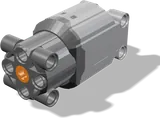
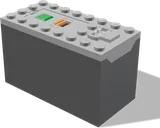
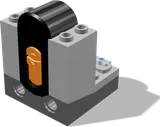
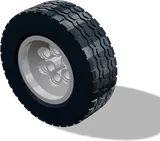
Ten obstacles, three levels, one parts bin. Each agent designs a robot and its open-loop motor program; the robot must reach the goal in time and stay upright for 5 s.
Every robot that passes in simulation is built and tested on the real course. Every real failure goes back to the agent as a video.
Two in three simulated passes also cross the real course. Shown a video of its failure, the agent fixes most of the rest.
1Built from the simulated design
2How the rest fail
3The agent watches its failure and redesigns
One robot for all ten obstacles crosses at most six of them. Bumps want clearance, the bridge a narrow track, the rope a light chassis hung from a cord. No single robot does it all.
Thousands of agent-designed robots on one map. Each dot is an agent design, placed by how it looks. Ringed dots were built: open one to watch it in simulation and on the real course.
Hover or tap a dot · drag to pan · click the map, then scroll to zoom · pinch on touch
@article{nehme2026robobuilder,
  title={RoboBuilder: Agentic Robot Co-Design with Real-world Video Feedback in the Loop},
  author={Nehme, Ghadi and Nam, Dahyun and Srinivasan, Akshay Govind and Ahmed, Faez},
  journal={arXiv preprint arXiv:2611.23855},
  year={2026}
}
Scope. The simulator is fitted from a fixed camera and bench tests, so not every parameter is identifiable; each loop correction is fitted to one failure; Light and Fast designs were not built. We release the simulator, courses, designs, simulations and 461 paired real videos.